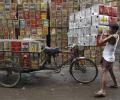
In a bid to further cool down edible oil prices and curb hoarding, the Centre on Friday extended stock limits on edible oils and oilseeds till June 30. Besides, the government has specified the stock limits that have to be imposed by states that have not implemented the earlier order on the limits. In October 2021, the ministry of consumer affairs had imposed stock limits till March 2022 and left the decision to states to decide on the stock limits based on available stock and consumption pattern.

India will have an oil products surplus of seven million tonnes in the year to March 2004, an oil ministry spokesman said

The CAG, in its much-awaited report tabled in Parliament on Thursday, did not say if the capital expenditure for KG-D6 being raised from $2.4 billion proposed in 2004 to $8.8 billion in 2006 was unjustified or inflated.

Vedanta's Cairn Oil & Gas on Thursday announced the appointment of Nick Walker as the new chief executive officer (CEO) of the company. In a statement, the company said the appointment is effective January 5. "Before this appointment, Walker was president and chief executive officer at Lundin Energy, one of the leading European independent E&P companies," it said.

The Standing Committee on Petroleum and Natural Gas in its report tabled in Parliament today asked the ministry to strictly monitor implementation of directions issued to RIL for reversing the trend of falling gas output from the Bay of Bengal field.

Donald Trump is catering to the basest fears and prejudice of unenlightened Americans -- yes, there are those too, in sizeable enough numbers to elect one of their own as president. That would most certainly not Make America Great Again, asserts Shreekant Sambrani.

The 18 companies sanctioned include Marshall Islands-registered Changtai Shipping and Motionavigations Limited and UAE-based Indo Gulf Ship Management.

Petrol and diesel prices were cut by Rs 2 per litre each as state-owned oil companies ended a nearly two-year-long hiatus in rate revision, just hours before the general election schedule was announced.

Russia has welcomed India's decision to not support the price cap on Russian oil announced by G7 and its allies and offered it cooperation on leasing and building large-capacity ships to overcome the ban on insurance services and tanker chartering in the European Union and Britain to continue buying discounted oil. The offer came as Russian Deputy Prime Minister Alexander Novak held a meeting with the Indian Ambassador to Moscow, Pavan Kapoor, on Friday. "The Deputy Prime Minister welcomed India's decision not to support the price cap on Russian oil, which was imposed on December 5 by the G7 countries and their allies," the Russian foreign ministry said in a statement.

The ministry refused to buy RGTIL's argument that the government has already allocated all of the projected mmscmd of gas output from the KG-D6 fields to customers in Andhra Pradesh, Maharasthra and other northern states, leaving no gas for transportation through its proposed pipelines from Kakinada to Howrah, Chennai, Tuticorin and Mangalore.

"In principle, the ask in return is that India should not support the G7 (Group of Seven) proposal. "A decision on this issue will be taken later following talks with all the partners," an official with the Ministry of External Affairs (MEA) said.These "substantial discounts" will be steeper than those offered by Iraq in the past two months, officials said.

The headline for corporate profit growth has been very encouraging in the July-September quarter (Q2) of 2023-24 (FY24), with the combined net profit of listed companies up by 38 per cent year-on-year. However, the earnings distribution has been very lopsided, with most of the growth coming from public-sector oil-marketing companies (OMCs), banks, non-bank lenders, automobile (auto) companies, and cement producers. By comparison, companies from information technology services, fast-moving consumer goods (FMCG), retail, and consumer durables were disappointed, experiencing a sharp slowdown in net sales growth and a relatively muted increase in reported net profit.

Anil dared the oil ministry to cancel the production sharing contract with RIL if it was really aggrieved and not challenge third party agreements.
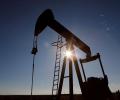
Former oil secretary Tarun Kapoor, present and former chairmen of ONGC and a former director of IOC, are among over a dozen people who have applied for the top job at the oil and gas regulator, PNGRB, sources said. Kapoor, who superannuated as Secretary to the Ministry of Petroleum and Natural Gas last month, is the most prominent name in the list of 13 persons who have applied to become the chairman of Petroleum and Natural Gas Regulatory Board (PNGRB). Oil and Natural Gas Corporation (ONGC) chairman and managing director Subhash Kumar and his predecessor Shashi Shanker are also in the race and so is G K Satish, who superannuated as Director for Planning and Business Development from Indian Oil Corporation (IOC) a couple of months back.

The finance ministry has offered less than half of the Rs 31,700 crore (Rs 317 billion) sought by the oil ministry to make up for revenue losses incurred by the state-owned retailers on sale of LPG and kerosene. Petroleum Minister Murli Deora on Thursday met Finance Minister Pranab Mukherjee to seek compensation for the public sector oil firms for their losses but the meeting remained inconclusive.

The Department of Disinvestment, which is looking at mopping up Rs 40,000 crore (Rs 400 billion) from the sale of shares in public sector units this fiscal, has raised about Rs 1,325 crore (Rs 13.25 billion) so far.

The government on Wednesday more than doubled the price of natural gas produced by state-owned Oil and Natural Gas Corp (ONGC) and Oil India Ltd to $4.20 per mmBtu, at par with the rate at which Reliance sells its gas.

The US Trade Representative noted that India's average applied tariff rate stood at 17% per cent, the highest of any major world economy.
A week after doubling of natural gas prices was approved, the Oil Ministry on Friday rebutted charges of the move resulting in windfall gains to Reliance Industries, saying new gas production from the company's fields will not start before 2017-18.

Natural Gas production from KG-D6 block has dropped to below 20 million standard cubic metres a day this week, from over 63 mmscmd peak output achieved in August 2010.
Agrees with RIL's stand that CAG cannot do a performance audit of the company.

Two Guinness World Records -- most people performing 'aarti' simultaneously and the largest display of oil lamps -- were set at the eighth edition of Deepotsav in Ayodhya on Wednesday.
The government has slapped a $2.81 billion (about Rs 24,500 crore) demand notice on Reliance Industries and its partners, including BP Plc for gains made from producing and selling natural gas that may have migrated from neighbouring block of state-owned ONGC. This follows the Delhi high court's decision on February 14, overturning an international arbitration tribunal ruling that held the duo not responsible for paying any compensation for the gas they produced and sold which had allegedly migrated from adjoining fields.

In a presentation to investors in Mumbai last week, Aramane Giridhar, Joint Secretary (Exploration) gave detailed reasons for pendency of decisions in the Ministry of Petroleum and Natural Gas where officials approved of decisions but refused to issue formal orders, resulting in delays in production of oil and gas.
The Divestment Ministry is moving fast to restart the sell-off process and go ahead with divestment in oil PSUs -- HPCL and BPCL.\n\n\n\n

India and the United States will finalize the contours, schedule of negotiations, and terms of reference for a proposed bilateral trade agreement (BTA) during a three-day meeting beginning Tuesday. The agreement is expected to be finalized in two tranches, with the first phase focusing on goods trade. The US team, led by Assistant US Trade Representative for South and Central Asia Brendan Lynch, will be in India from March 25-29 to discuss the agreement. Both countries are aiming to conclude the first phase of the agreement by fall 2025.
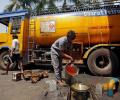
The medium-term scenario for oil marketing companies (OMCs) is high risk due to the surging crude and gas prices. Apart from OPEC-plus cutting production, the Hamas-Israel conflict has caused fears of supply disruption. The July-September quarter of 2023-24 (Q2FY24) saw positive surprises for OMCs. Strong gross refining margins (GRMs) more than offset weak marketing margins.
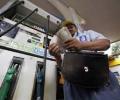
Under-recovery or the gap between retail selling price and the cost of import, this month dipped to an all-time low of 8 paise a litre, helped by the monthly increases and softening in international oil rates.

Key infrastructure sectors -- from railways to power, and from coal to petroleum -- will not only be part of the achievements but promises too, as the BJP fights to get a third term at the Centre.
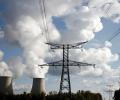
Rising energy demand could tilt India's energy basket towards fossil fuels from coal to oil, natural gas.

Oil and Natural Gas Corporation had in 2007 farmed out 15 per cent stake in the KG-DWN-98/2 block, which sits next to Reliance Industries' KG-D6 block, to Brazil's state-controlled oil firm Petroleo Brasileiro SA or Petrobras.

The Centre may overshoot the Rs 56,260 crore target for dividend receipts from central public-sector enterprises (CPSEs) set for FY25 and is likely to end up getting around Rs 65,000 crore this financial year, according to a senior government official. This excludes dividend from nationalised banks and financial institutions. As on October 21, the Centre collected Rs 28,913 crore as dividend and other investment from CPSEs, accounting for over 50 per cent of the Budget Estimate for FY25.
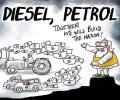
The government on Friday slapped an export tax on petrol, diesel and jet fuel (ATF) while also joining nations like the UK in imposing a windfall tax on crude oil produced locally. A Rs 6 per litre tax on export of petrol and ATF and Rs 13 per litre tax on export of diesel is effective from July 1, finance ministry notifications showed. Additionally, a Rs 23,250 per tonne tax was levied on crude oil produced domestically.
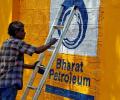
BPCL is a high revenue-earning public-sector undertaking (PSU) and plans to privatise it are completely off the table, Petroleum and Natural Gas Minister Hardeep Singh Puri said on Tuesday after assuming charge of the ministry for the second time. "Why would we divest ourselves of highly successful Maharatnas like BPCL," Puri said, arguing the Centre was not in favour of divesting its stake in oil PSUs.
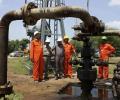
The petroleum ministry has told ONGC to give away 60%stake plus operating control in India's largest oil and gas producing fields of Mumbai High and Bassein to foreign companies, according to an October 28 letter to the state-owned company. Amar Nath, additional secretary (exploration) in the Ministry of Petroleum and Natural Gas, wrote a 3-page letter to ONGC chairman and managing director Subhash Kumar, saying productivity of the Mumbai High and Bassein & Satellite (B&S) offshore assets under state-owned firm was low and international partners should be invited and given 60 per cent participating interest (PI) and operatorship. This is the second time since April that Nath, who is part of the ONGC management as the longest-serving government nominee director on its board and often considered a potential candidate to replace Kumar next year, has written an official letter, painting a poor picture of the company's performance.
The Oil Ministry has proposed a Rs 3-4.50 per litre hike in diesel price and Rs 100 in LPG rates along with raising the number of subsidised cooking gas cylinders for households to nine a year from the current cap of six.

The prohibition has freed up as much as 60 million litres of ethanol

Inputs by the Petroleum Ministry were found among stolen documents.
